
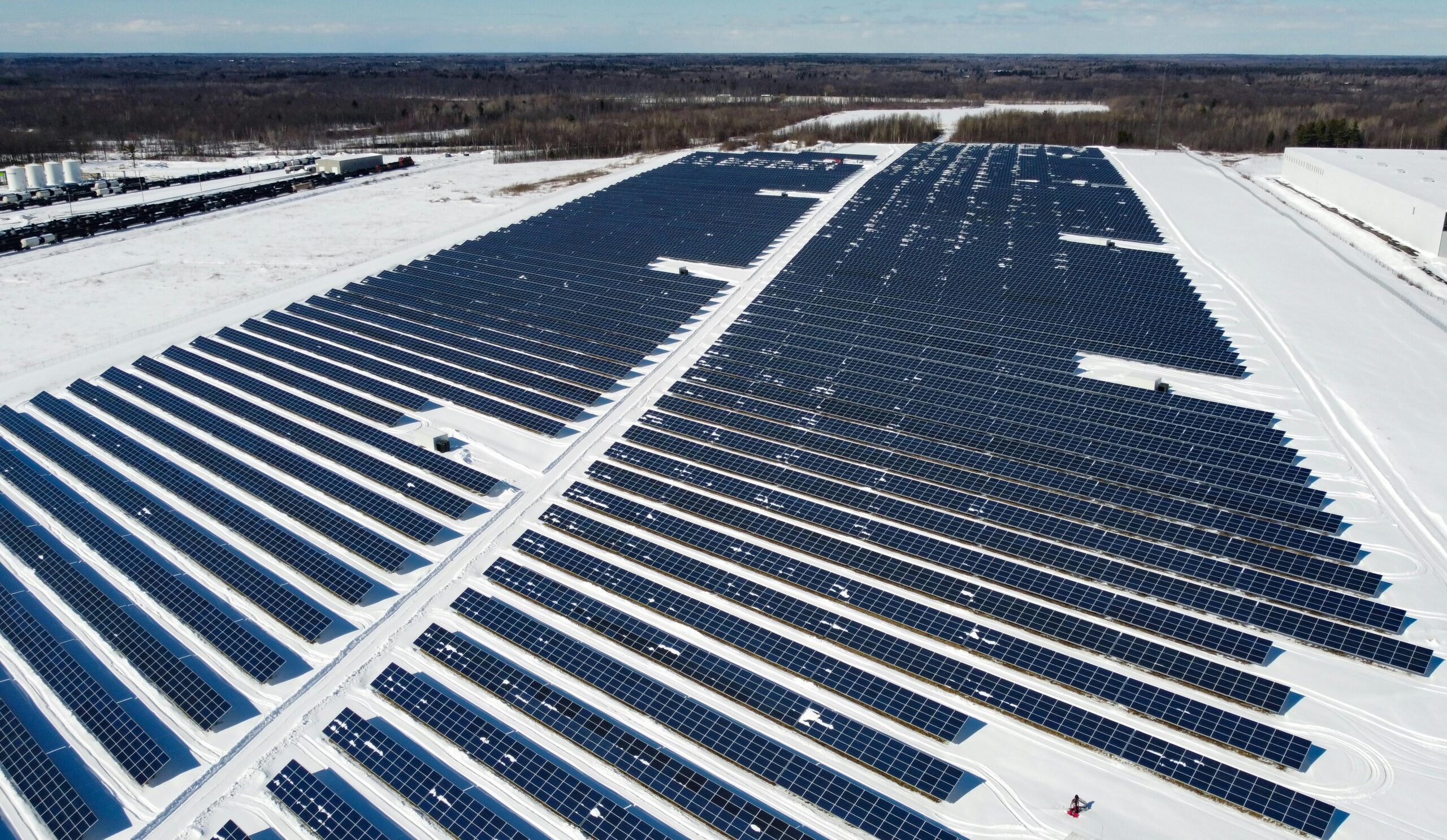
They work even without direct sunlight.
Solar panels don’t need blazing sun to do their job. Even on cloudy days, they keep producing power from scattered, or “diffuse,” light. Think of a solar calculator—it runs indoors with just a little light. Panels need more light, of course, but the point is: sunshine isn’t the only way they shine.
Cooler weather = better performance.
It surprises people, but solar panels actually run more efficiently in cooler temperatures. Heat makes them a bit sluggish. So in winter, the only reason production drops is simply because the days are shorter—not because it’s cold.
Panels don’t store power.
A panel’s job is to capture sunlight and instantly turn it into electricity. If you want storage, that’s where batteries come in—or you send the extra power back to the grid. The panel itself is a generator, not a battery.
The glass cleans itself.
Most panels are covered with tempered, anti-reflective glass designed to shed dust and dirt. Rain usually does the heavy lifting, but if you live in a dry or dusty area, an occasional rinse can keep them at peak performance.
They’re highly recyclable.
Over 90% of a panel’s materials—like glass, aluminum, and silicon—can be recycled. While large-scale recycling centers are still developing, by the time today’s panels reach retirement in 20+ years, recycling options will be everywhere.
They outlast expectations.
Manufacturers typically warranty panels for 25–30 years. But here’s the kicker: many keep running for 40+ years, just at slightly lower efficiency. In other words, the industry loves to under-promise and over-deliver.
They helped launch the Space Age.
Solar panels aren’t just for rooftops—they power satellites and spacecraft. In fact, some of the very first solar panels were used in satellites decades ago. Many of those satellites are still orbiting Earth today, fueled by the same solar tech.
Not all solar panels are the same.
From sleek monocrystalline to budget-friendly polycrystalline to lightweight thin-film, solar panels come in different types with different strengths. A good installer will match the right one to your needs—not just what’s on sale.