
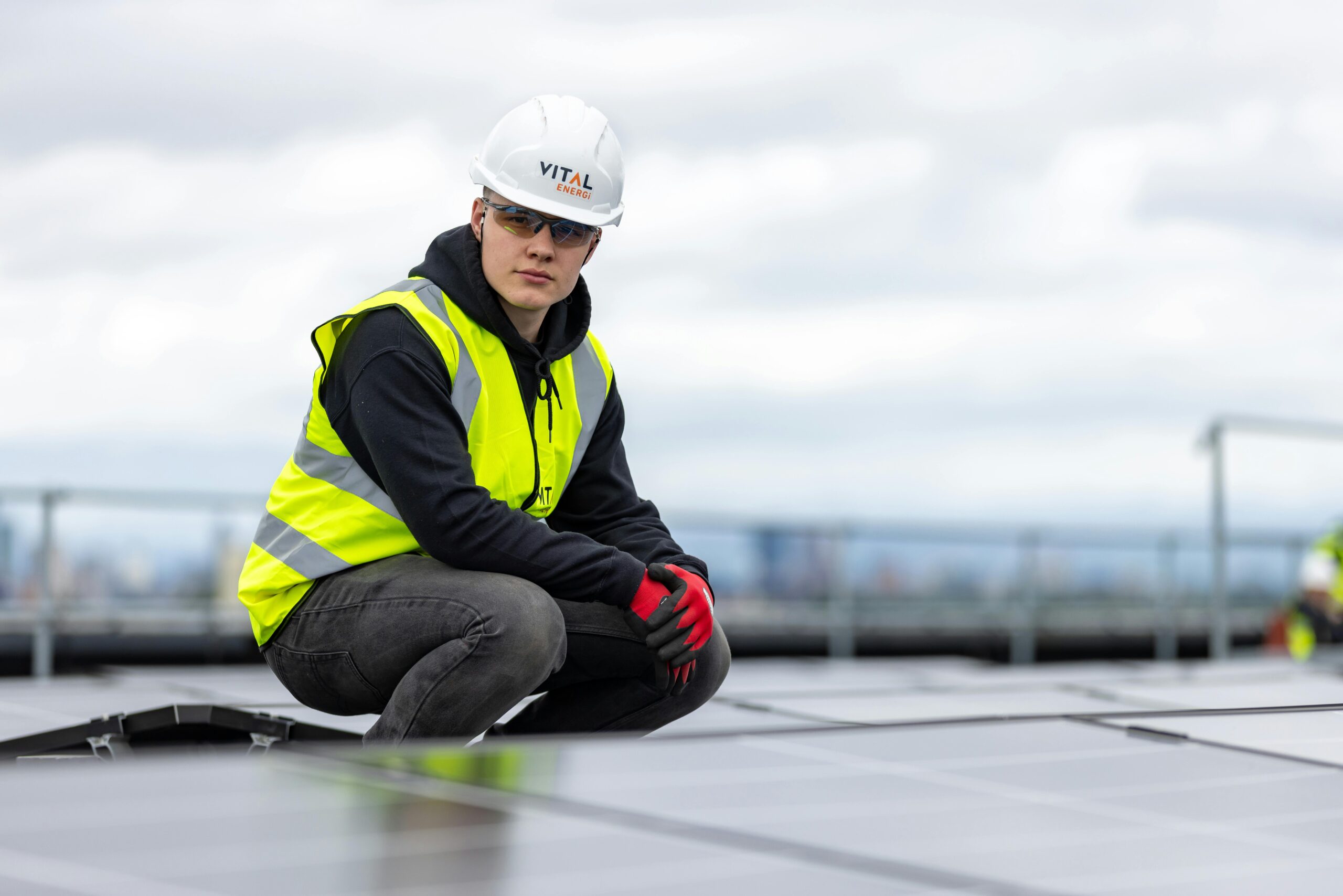
Local vs. National Installers
Local installers might actually be the better choice. When you work with local installers, you generally get better service, more personalized support, and can easily contact someone nearby. National installers tend to be more corporate and are more likely to outsource services like support.
Be sure you pick an installer who is certified. The NABCEP (North American Board of Certified Energy Practitioners) certification is a strong credential for installers.
Go beyond that and make sure they are licensed, bonded, and insured.
Equipment Quality and Warranties
Talk with your potential installer about warranties. Make sure the warranties they offer are strong and will protect you in case of damage or an emergency. Good warranties are typically 20–25 years or more.
Warranties & Service
Panel warranties usually last 25–30 years.
Performance warranty: Guarantees power output (usually 80–90% at year 25).
Workmanship warranty: Covers the installation itself (should be at least 10 years).
Ask about the claims process—do they handle warranty claims for you, or are you on your own?
Financing and Pricing
What do they offer—cash, loans, leases, or PPAs (Power Purchase Agreements)? Make sure you understand the interest rates, as well as what federal and state refunds or tax credits you may qualify for.
System Design and Customization
This is huge. A lot of people think you just place the panels on the south side of the home and call it good—but it’s more than that. A good solar company will design your system to truly meet your power needs, using different parts of your roof to maximize coverage for your home’s unique situation.
A quality company will also provide a detailed proposal with expected production numbers.
Monitoring and Support
Will you be able to track output with an app? What about ongoing service, cleaning, or maintenance? Will the company stand behind their work, or will they disappear after installation?
Permits and Paperwork
Good solar companies handle the paperwork. You should have to do very little—they’ll take care of permits and coordinate with local and county agencies. They do the heavy lifting.
Pro Tips / Red Flags
High-pressure sales tactics: salespeople who act like your best friend but get offended when you hesitate, or who use the “sign today or lose this deal” approach.
Vague answers to your questions.
Pressure so intense that you don’t feel like you can compare multiple offers or quotes.
In the end, go with your gut. If it feels too good to be true or what’s being promised feels off, find someone you can trust.
The best solar companies have a team you can rely on. Contact us with any questions about your solar needs.