
Imagine driving through Utah and seeing solar panels on nearly every suitable rooftop—from St. George to Logan, from the Wasatch Front to the mountain communities. How much electricity could we generate? Would it reduce our dependence on traditional power plants? And what if we focused on just Utah County, Salt Lake County, and Summit County?
The answers reveal how much potential rooftop solar has—and why generating electricity is only part of the equation.
What If Every Home in Utah Had Solar Panels?
Utah has abundant sunshine, making rooftop solar an attractive option for many homeowners. According to the U.S. Department of Energy, an estimate from the National Renewable Energy Laboratory puts Utah’s technical rooftop solar generation potential at approximately 7.3 million megawatt-hours (7.3 terawatt-hours) annually.
For perspective, Utah’s retail electricity sales totaled approximately 34.7 million megawatt-hours in 2024. Comparing these figures, the estimated rooftop solar potential is equivalent to about 21% of the state’s annual retail electricity sales.
That’s a substantial amount of electricity, but there is an important distinction: technical potential is not the same as actual production. Roof orientation, shading, structural limitations, installation costs, and other factors affect how much electricity could realistically be generated.
Even so, widespread rooftop solar could help Utah reduce the amount of electricity it needs from conventional power plants, particularly during sunny daytime hours.
What Would Change for Utah Homeowners?
If solar panels became commonplace across Utah, homeowners could benefit in several ways:
Lower electricity purchases. Homeowners could use the electricity their panels generate instead of purchasing as much from their utility. Actual savings would depend on installation costs, electricity rates, utility compensation rules, and household energy use.
More local electricity generation. Producing electricity close to where it is consumed could reduce demand on the wider grid during sunny hours.
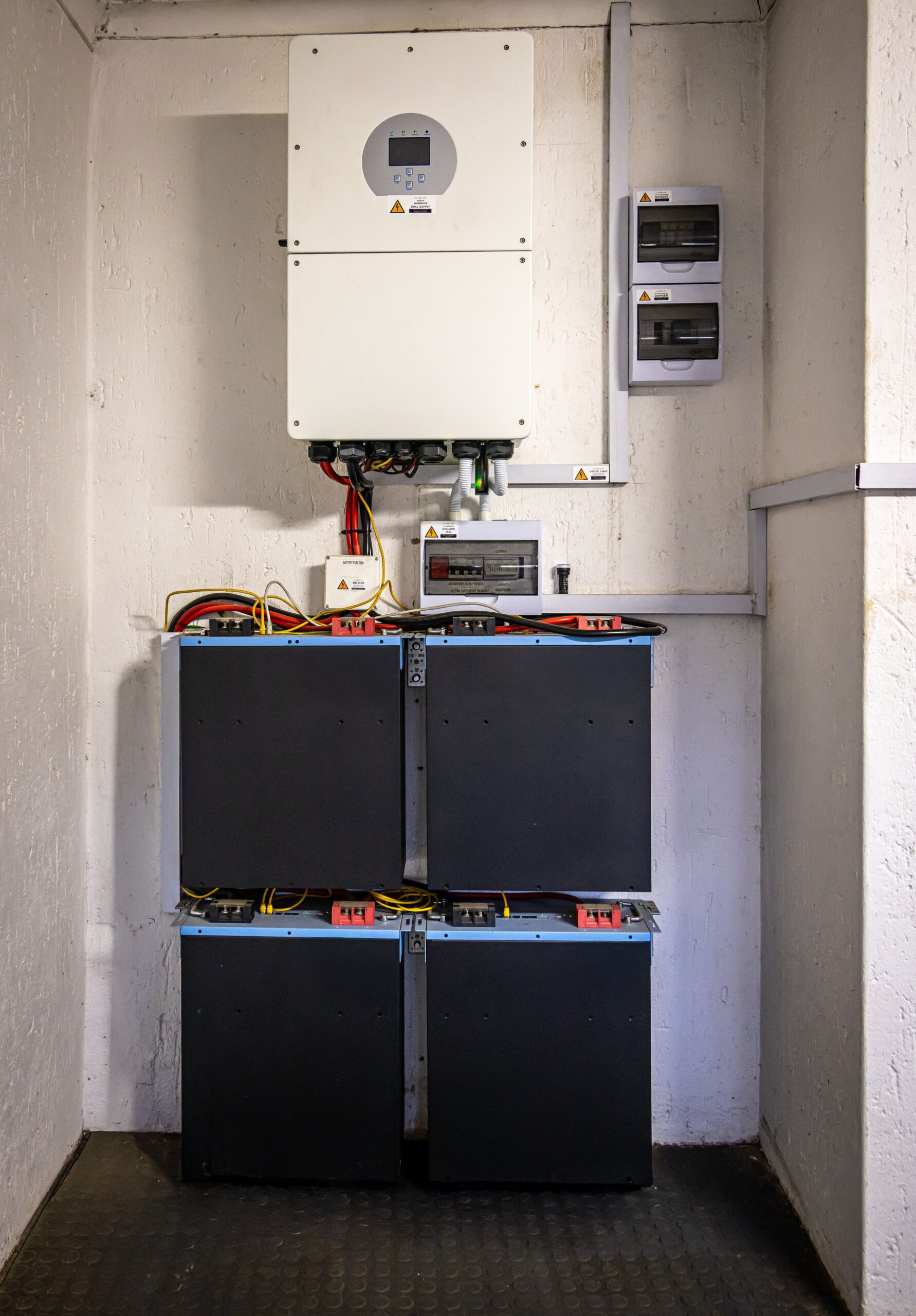
Greater interest in home batteries. As rooftop solar becomes more widespread, homeowners may consider batteries to store excess daytime electricity for evening use or backup power during outages.
More flexible energy use. Smart appliances, electric vehicle chargers, and home energy-management systems could help households use electricity when solar production is highest.
However, widespread solar would not eliminate Utah’s need for a reliable electricity grid. Homes would still need electricity at night, during periods of low solar production, and whenever their own systems could not meet their demand.
What If Utah County, Salt Lake County, and Summit County Went Solar?
Instead of looking at the entire state, let’s consider three counties along the Wasatch Front and in the surrounding mountain region.
Using 2025 U.S. Census Bureau housing-unit estimates, these counties contain approximately 729,000 housing units combined.
| County | Estimated housing units |
|---|---|
| Salt Lake County | 467,312 |
| Utah County | 233,127 |
| Summit County | 28,219 |
| Total | 728,658 |
These figures include housing units beyond detached houses, such as apartments and other residences. Not every unit would be suitable for an individual rooftop system, but the totals help illustrate the potential scale.
How Much Electricity Could These Counties Generate?
Imagine a simplified scenario in which every housing unit had a 6-kilowatt solar system.
If each installed kilowatt generated 1,500 kilowatt-hours annually, the combined systems would produce approximately 6.6 billion kilowatt-hours of electricity per year, or 6.6 terawatt-hours.
That is a hypothetical estimate, not a prediction. It assumes every housing unit receives a system, regardless of roof suitability, and uses the same annual production rate. Real-world output would vary with location, shading, roof direction, weather, and system design.
Nevertheless, it illustrates the scale of the opportunity. Widespread solar adoption across these three counties could contribute a significant amount of electricity to Utah’s energy supply.
Why Each County Matters
Salt Lake County: A large urban solar resource
With the largest number of housing units among the three counties, Salt Lake County could make a substantial contribution. Rooftop solar on homes, apartment buildings, warehouses, and commercial properties could expand the opportunity beyond residential installations alone.
Utah County: An opportunity to plan for solar growth
As Utah County continues to grow, new neighborhoods and buildings could incorporate solar-ready designs. Planning for solar during construction can make future installation easier and may reduce the need for some costly retrofits.
Summit County: Mountain conditions require a different approach
Summit County presents different challenges, including snow, roof shading, and variations in roof orientation. However, community renewable-energy programs offer another way for residents to support clean electricity without requiring every homeowner to install panels individually.
Together, these counties could become an important center for distributed solar generation in Utah.
Would Rooftop Solar Eliminate the Need for Traditional Power Plants?
No—not on its own.
The key issue is that generating enough electricity over an entire year is not the same as having enough electricity available at every moment.
Consider three situations.
1. A Sunny Summer Afternoon
Solar panels could generate large amounts of electricity while homes and businesses are using power. This could reduce demand for electricity from other generators.
If production exceeds local demand, however, the excess electricity must be used elsewhere, stored, exported, or curtailed.
2. A Winter Evening
After sunset, rooftop solar stops producing electricity. Meanwhile, households may be using lights, cooking appliances, electronics, and electric heating equipment.
The electricity must come from stored energy, other power plants, or electricity imported through the regional grid.
3. Several Cloudy or Snowy Days
Solar production can fall during extended periods of poor weather or when panels are covered by snow.
Batteries can shift electricity from one part of the day to another, but maintaining power through prolonged periods of low production may require substantial storage, other generating resources, and access to electricity from neighboring states.
For Utah to rely much more heavily on solar, it would need a combination of renewable generation, storage, demand management, and dependable electricity supplies.
Would Every Home Need a Battery?
Not necessarily.
Some homeowners might benefit from batteries because they want backup power or because storing electricity is more economical than exporting it to the grid. Others may find that installing solar panels without a battery offers better financial returns.
Batteries also have limitations. They add upfront costs, lose some energy during charging and discharging, and gradually lose capacity over time.
A widespread solar strategy would therefore need to consider more than simply installing a battery in every home. It would need to determine where storage is most valuable, how much is required, and whether community-scale storage or other grid resources could provide some of the same benefits more economically.
The Bigger Picture: A More Solar-Powered Utah
If every suitable home in Utah had solar panels, the state could generate a substantial amount of electricity from its rooftops. If Utah County, Salt Lake County, and Summit County adopted solar on a large scale, they could create a particularly significant concentration of distributed electricity generation.
But the real transformation would involve more than panels on roofs.
It would mean coordinating solar production with electricity demand, expanding storage where it makes sense, improving energy efficiency, and maintaining a grid that can reliably supply electricity when the sun isn’t shining.
Rooftop solar could play a major role in Utah’s energy future, but the goal should not simply be to put panels on every roof. It should be to build an electricity system that makes the best use of the energy those panels produce.
With thoughtful planning, Utah could take advantage of its abundant sunshine while maintaining the reliable electricity supply that homes, businesses, and communities depend on.